Ống thổi cao su tùy chỉnh để chống bụi và làm kín linh hoạt
Chọn một vài mẫu và cho chúng tiếp xúc với dầu, chất tẩy rửa, chất làm mát, ozone và các điều kiện hóa học/môi trường khác được phát hiện trong quá trình xem xét ứng dụng. Các mẫu vật liệu thử nghiệm có thể phát hiện sự thay đổi của vật liệu. Các mẫu đã lắp ráp có thể cho thấy kết quả của sự giãn nở, mất độ bám dính và sự thay đổi nếp gấp của gioăng.
Sau khi thử nghiệm gấp, hãy phân tích phần gốc và đỉnh của các nếp gấp, cũng như các điểm chuyển tiếp. Ghi chú lại các dấu hiệu mài mòn, gãy vỡ, biến dạng do quá tải và bụi bẩn tìm thấy bên trong các nếp gấp. Việc chấp nhận thiết bị phải rõ ràng sau khi thử nghiệm hoàn tất, bao gồm số chu kỳ, mức độ bẩn cho phép và lực tối đa (nếu có).
Ống thổi cao su tùy chỉnh cần được đánh giá lại nếu có bất kỳ thay đổi nào về vật liệu, dụng cụ, độ dày thành hoặc cách lắp đặt. Việc phê duyệt mẫu là bằng chứng cho thấy cấu hình đã thử nghiệm là tốt. Tuy nhiên, không nên cho rằng những thay đổi sau này ảnh hưởng đến độ bền hoặc mối nối cũng được bao gồm.
Vui lòng liên hệ với chúng tôi bằng thông tin bên dưới.
Cung cấp danh sách các chất gây ô nhiễm bên trong và bên ngoài với thông tin cụ thể về bụi, loại hạt, loại dầu, loại nước và loại hóa chất tẩy rửa được sử dụng. Thêm vào đó là phạm vi nhiệt độ, việc bộ phận đó có được sử dụng ngoài trời hay không, mức độ chân không hoặc áp suất cần tác dụng và liệu thiết bị của bạn có yêu cầu chứng nhận đặc biệt từ cơ quan quản lý thực phẩm hay không, hoặc đó có phải là thiết bị điện hay có yêu cầu về độ sạch sẽ trong quá trình vận hành hay không.
Ống thổi cao su đúc - vui lòng chỉ rõ phương pháp lắp đặt và cách các bộ phận được ghép lại với nhau. Chiều rộng kẹp, hình dạng rãnh và bề mặt tiếp xúc được hoàn thiện như thế nào, cũng như các dụng cụ lắp đặt nào sẽ được sử dụng, có thể giúp xác định liệu các đầu có giữ chặt với nhau hay không.
Hợp tác với Nhà máy
Công ty Dalian Yida đã sản xuất các sản phẩm cao su chính xác trong nhiều năm, vì vậy họ có kinh nghiệm và hiểu biết về nhu cầu sản xuất các bộ phận cao su tùy chỉnh theo thông số kỹ thuật của khách hàng. Đối với gioăng dạng ống xếp, chúng tôi sẽ xem xét khả năng sản xuất, vật liệu, kích thước quan trọng và phương pháp thử nghiệm nguyên mẫu trong ứng dụng thực tế.
Việc đạt được thỏa thuận về giới hạn chuyển động và tiêu chí chấp nhận trước khi gia công là rất hữu ích, đặc biệt nếu điều đó cho phép chúng ta thảo luận về hình dạng gấp, cách lắp đặt và các điểm kiểm tra. Nếu có dữ liệu về hư hỏng do một sản phẩm hiện có gây ra, chẳng hạn như mô hình hư hỏng đó, thì nó có thể trở thành cơ sở để thiết kế và thảo luận ban đầu.
Ống xếp phải cho phép các bộ phận chuyển động tự do di chuyển mà không làm phá vỡ rào cản theo hướng sai. Vì vậy, tất cả phụ thuộc vào hình dạng, vật liệu và sự phù hợp của phần cứng mà bộ phận đó phải chịu sau khi quá trình thử nghiệm đã được thực hiện.
Do đó, việc lựa chọn vật liệu cho ống thổi cao su chỉ là một phần của quá trình quyết định lớn hơn và phức tạp hơn. Tuy nhiên, một khi Yida nhận được thông tin chi tiết về phạm vi chuyển động, chất gây ô nhiễm hoặc mô tả về phương pháp gắn kết, thì việc xem xét thiết kế và lập kế hoạch lấy mẫu cho bộ phận dự định có thể được thực hiện để hỗ trợ các nhu cầu thiết kế thực tế.
Convolution Geometry Controls Local Strain
The geometry of the convolutions i.e. their number, the pitch (the distance between them), the depth of the folds, and the wall thickness, is what actually defines the distribution of movement in the bellows.
A few convolutions may cause a single fold to go through a large shape change whereas the bellows with many convolutions may have a problem of insufficient room at the compressed place causing fold-to-fold contact.
Mold rubber bellows can also have end flanges, lips, beads, and grooves which help in making the attachment easier. Although, integration can reduce the number of separate components, it also ties the sealing function to the molded size. Clamp position and the extent of compression need to be pre-located and the assembly is left to the discretion of the person doing the work.
Material Choice Follows the Environment
In the case of the rubber bellows material is selected, exposure list has to be made out first. Dust might be either extremely fine, abrasive, or perhaps a combination of dust and oil. In the case of outdoor installations, ozone, sunlight, rain and temperature cycles are added. Cleaning agents in the factory might contain either alkaline or acidic solutions.
Natural rubber-based polymers like NBR are often the choice in areas where mineral oils and greases are common; however, for a complete check of their suitability the factors of weathering and low temperature must also be taken into account. EPDM is appropriate for outdoor weather, water and cleaning environments; however, these are only a few of the properties where it might work, especially against petroleum oils, where it is generally unsuitable.
FKM is known for heat resistance and good compatibility with oils; however, its performance at low temperatures could be a concern. Silicone rubber is able to perform a wide range of functions from very cold to very hot temperatures, it also resists weathering, though it tends to tear and abridge more easily, especially when exposed to sharp dust or rough installation paths. The balance is likely to change from one compound e.g., CR to the next. It should always be borne in mind that no particular rubber family guarantees suitability in isolation from the formula and exposure conditions.
A Public Food Powder Equipment Case
ATP Group reported a bellows application in an automatic machine that doses food powders. The machine used eight hoppers connected to a moving plate. The connection of the rubber component needed to accommodate the movement of approach and separation as well as the vibration from handling of the content.
The bellows stroke length that was specified was around a single millimeter. Despite this small movement, dust control and the requirement to maintain hygienic conditions were of utmost importance. A loss of powder into the surroundings through the funnel was the concern, but the greater issue was to prevent the outside contamination from entering the powder path.
This instance explains that just by the size of the movement, one can’t get any information about the difficulty of the design. A small stroke may still demand the ability of the material to resist fatigue, the design that does not create dust particles, the ability of the assembly without being too difficult, having food-grade documentation. The acceptance criteria are set by the whole process.
That was an example given by the vendor which is not our case. This is only a case in which the supplier has been used publicly and not a result achieved by Yida. This example is only given in order to show a possible scenario in a certain industrial operation environment, but it cannot claim the performance level or compliance with standards of another bellows. Therefore, a new bellows design would still need to provide the material specifications that document the compatibility of the rubber with the powder, cleaning and motion conditions and to be tested accordingly.
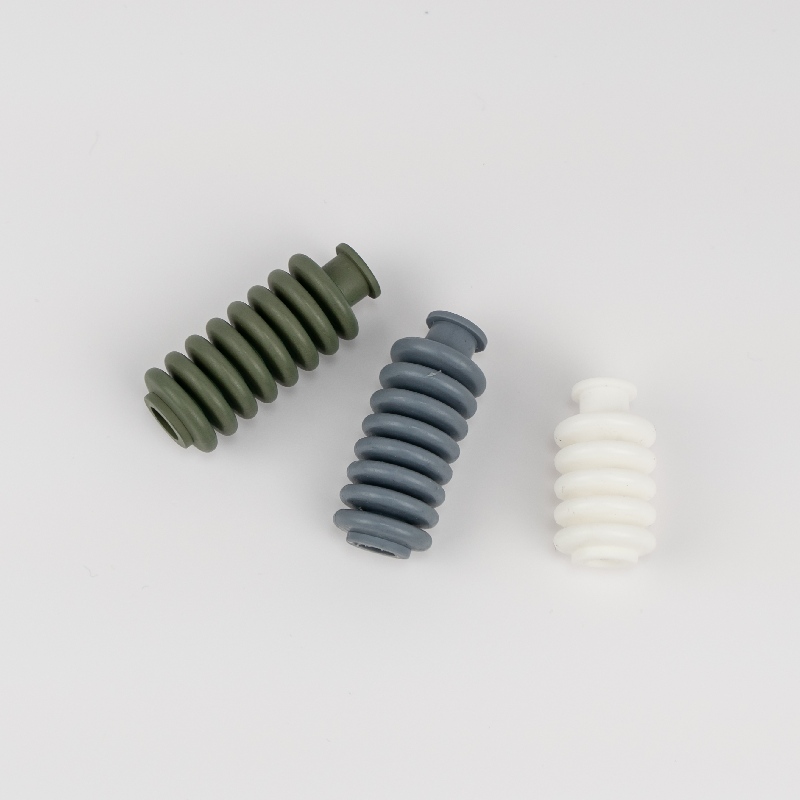
Dust Protection Ratings Need Careful Language
IEC 60529 defines IP degrees of protection for electrical enclosures. An IP5X or IP6X claim applies to the tested enclosure configuration, including its bellows, joints, fasteners and other openings. It should not be assigned to one loose rubber component by itself.
Rubber bellows for dust protection can support an enclosure target, but the finished assembly must be tested in the specified condition. Bellows position, stroke, cable routing and mounting compression can change the result. A static test at one position may not represent dust exposure during movement.
What Material Tests Can Establish
ASTM D624 measures tear strength under a defined test configuration. The result can help screen compounds where notches or edge damage are concerns, but the standard states that the relationship to service must be determined for the individual application.
ASTM D573 evaluates the effect of elevated-temperature air aging on rubber properties. It is useful for laboratory comparison, while ASTM states that the result may not correlate exactly with service because operating conditions vary.
ASTM D2000 provides a system for classifying vulcanized rubber materials by heat-aging resistance, oil swelling and additional requirements. It helps define a compound specification. It does not prove the fatigue life, fit or dust performance of a bellows shape.
These methods answer material questions. Finished-part testing must answer the product questions: can the part be installed without damage, move through the full envelope, remain attached and keep the required contamination barrier after repeated cycles?
Where Bellows Commonly Fail
Fold contact is a frequent geometric risk. When convolutions rub at full compression, the surface can polish, heat and eventually wear through. Contamination trapped between the folds can make the abrasion more severe.
Tearing often starts at a sharp transition, thin area, gate location or damaged mounting edge. Excess stretch during installation can create a small cut that grows during cycling. Tear strength data cannot compensate for an assembly tool with an exposed burr.
End separation occurs when the clamp load, bead shape or mating surface does not control movement. Oil beneath a clamp can reduce grip. A hose clamp tightened by feel may also produce uneven pressure and cut into the rubber.
Part inspection process completed
Dimensional measuring begins at the controlled condition. Then verify the diameter for mounting, the height when installed, details of the wall features, and the fold critical dimensions. Check whether there is any flash, knitting lines, damage or thin area that might result in part motion problems.
Movе thе machine at thе dеsignеdfactor and thе dеsignеdfactor with a сеrtain offset whilе running thе сіrcuit at a temperature which is set to аcсеptеd standards. When it is safe, dust or contaminant can be handled. If part is a protection of the inside enclosure, measure the ingress on the assembly as it is placed, and is it moving at service speed?
Select a few samples and expose them to oil, cleaning, coolant, ozone, and other chemical/environmental conditions that were discovered in the application review. Testing material coupons can detect the change of material. Assembled samples can show the result of swelling, clamp loss, and seal fold change.
After the fold test, analyze the fold roots and crests, as well as the transitions. Make notes on the abrasion, fracture, deformation due to overloading, and dirt found inside the folds. The acceptance of the device must be clear after the test has been done, as, cycle count, how dirty can it be, and maximum force if any.
Custom rubber bellows should be re-evaluated if either material, tooling, wall-thickness, or mounting has been changed. Sample approval is proof that the tested configuration is good. However, it should not be assumed that a later change which affectsstrain or attachment is also covered.
Contact us with below information
Provide a listing of internal and external contaminants with specific details of the dust, the kind of particle, the type of oil, the type of water and the kind of cleaning chemicals that are used. Add the temperature range, the fact of whether the part is used outdoors or not, the level of vacuum or pressure to be exerted and if your device requires special certification from the food authority or it is an electrical device or there is a requirement of cleanliness at the time of operation.
Molded rubber bellows - please specify the mounting method and how the parts are put together. How clamp widths, groove shape, and mating-surface are finished, and what installation tools will be used might help determine whether the ends will stay together.
Collaborating with Factory
Dalian Yida has been making precision rubber products for many years, so it has experience and understanding of the needs to produce custom rubber parts that have a customer specification. Regarding bellows sealing, we will look at the manufacturability, materials, critical dimensions, and the testing method of the prototype in its actual application.
Getting the movement limitation and acceptance criteria agreement before machining is helpful, especially if it allows us to discuss the fold geometries mounting, and inspection points. If the data are available on the service of an existing product such as damage to be caused by, its pattern can become the basis, first, designing a discussion.
The bellows must allow the motion components freedom without the barrier being breached in the wrong direction. So it all depends on the geometry, the material, and the hardware matching that the part is subjected to after the part test has been carried out.
Consequently, the material choice of a rubber bellows is only a part of a bigger and more complex decision process. However, once Yida has received details on the movement range, contaminants, or a description of the attachment method, a designreview and a sampling plan for the intended part can be carried out as support to the practical design needs.